
UPper School
Grade 6 - Grade 12
At Coventry Christian Schools, the Upper School is designed to form both the mind and the heart. Through thoughtful study, meaningful discussion, and daily Christian discipleship, students grow in wisdom and virtue, preparing them to lead a flourishing life in Christ and for faithful service in God’s world.


The Upper School at Coventry Christian Schools seeks to create a community where students are known and thoughtfully challenged by faculty, staff, and administration during the important years of middle school and high school. Building on the foundations established in the Lower School, students grow not only in knowledge but also in responsibility, discernment, and Christian character as they prepare for flourishing life in Christ.
Classes are relational and discussion based. Teachers lead students through the Great Books, carefully designed writing assignments, scientific investigation, and respectful conversation. Students learn to ask good questions, express ideas clearly, and listen to others with humility. Daily Morning Devotions, prayer, and interaction with Christian faculty shape the spiritual life of the school so that faith is not limited to Bible class but is present in every subject and in everyday school life.
We follow the historic liberal arts tradition, a pattern of education Christians have used for centuries. Our goal is not simply the accumulation of information but the formation of wise and thoughtful young adults. We seek to develop students who live according to the classical virtues of Prudence, Justice, Fortitude, and Temperance, and the Christian virtues of Faith, Hope, and Love. As students mature, they are given increasing independence alongside accountability. They learn to use freedom responsibly, serve others, and engage the world with confidence grounded in a biblical worldview.
In recent years Coventry has expanded its facilities to support both academic rigor and hands-on learning, including the beginning stages of a Common Arts campus where students learn skills common to all humanity, including gardening, car repair, culinary arts, and grounds maintenance. Students also have opportunities for dual enrollment coursework through Cairn University as well as participation in arts, athletics, and leadership activities within a supportive Christian community.
The Upper School enrolls approximately 260 students, and a student-faculty ratio of 7.5-to-1 allows faculty to know students individually and partner closely with families. Coventry is accredited by the Society for Classical Learning, the Middle States Association of Schools and Colleges, and the National Christian Schools Association and maintains memberships with NACCAP, College Board, SCL, ACCS, and NCSA.


Earning a diploma from Coventry Christian Schools requires diligence and faithful engagement in a rigorous classical curriculum. Graduates receive a College Preparatory Diploma that reflects both academic readiness and spiritual formation. Rooted in the liberal and common arts, our program trains students to think clearly, communicate effectively, and pursue truth with wisdom and conviction, with opportunities for academic distinction and dual enrollment.
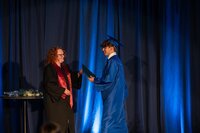
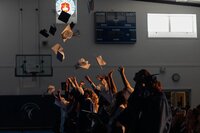
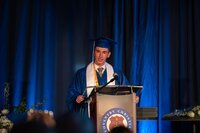
High School Graduation


THE GREAT BOOKS READING LIST
The Pony Express – Cheryl Harness
A Christmas Carol – Charles Dickens
Red Badge of Courage – Stephen Crane
Around the World in Eighty Days – Jules Verne
Roll of Thunder, Hear My Cry – Mildred Taylor
John Henry – Walker
To Build a Fire – London
O Captain! My Captain! – Whitman
The Martyr – Melville
1815–Present History Cards – Veritas Press
History of U.S. Book Series
Amazing Impossible Erie Canal – Cheryl Harness
The Code of Hammurabi
The Best Things in Life – Peter Kreeft
Oedipus Rex – Sophocles
Julius Caesar – William Shakespeare
Metamorphoses – Ovid
Epic of Gilgamesh
The Odyssey – Homer
Herodotus
Plutarch’s Lives Vol. 2
Livy – Early History of Rome
Augustus Caesar
Beowulf / The Wanderer
The Canterbury Tales – Chaucer
Le Morte d’Arthur – Thomas Malory
Sir Gawain and the Green Knight
Romeo and Juliet – William Shakespeare
The Song of Roland
The Church History – Eusebius
Confessions – Augustine
Rules for Monks – St. Benedict
Ecclesiastical History of the English People – Bede
Magna Carta
The Prince – Niccolò Machiavelli
95 Theses – Martin Luther
Pilgrim’s Progress – John Bunyan
A Modest Proposal – Jonathan Swift
Frankenstein – Mary Shelley
Pride & Prejudice – Jane Austen
Night – Elie Wiesel
Fahrenheit 451 – Ray Bradbury
Of Plymouth Plantation – William Bradford
Reformation Thinkers
Enlightenment Thinkers
Autobiography of Benjamin Franklin
Common Sense – Thomas Paine
The Constitution and Declaration of Independence
Federalist and Antifederalist Papers
Washington's Farewell Address
American and French Revolution Compared – Gentz
Slave Narratives
Lincoln’s Speeches
Why You Think the Way You Do – Glenn S. Sunshine
Antigone
Till We Have Faces – C.S. Lewis
The Oresteia – Aeschylus
The Aeneid – Virgil
Genesis
The Iliad – Homer
Meditations – Marcus Aurelius
Proverbs
The Republic – Plato
The Landmark Herodotus
Nicomachean Ethics – Aristotle
Early History of Rome – Livy
The War with Hannibal – Livy
Sin Study Textbook – selections from Thomas Aquinas, St. Francis de Sales, C.S. Lewis, St. John Cassian, John Damascene, St. Gregory the Great, Evagrius, etc.
The Decameron – Boccaccio
Piers Plowman
Inferno – Dante
Othello – William Shakespeare
Poetry selection – Petrarch, Skelton, Tichborne, Spenser, Shakespeare
On the Incarnation – Athanasius
City of God – Augustine
Consolation of Philosophy – Boethius
The Qur’an
The Lives of Thomas Becket – Michael Staunton (editor)
Summa Theologica – Thomas Aquinas
Utopia – Thomas More
The Freedom of a Christian – Martin Luther
Decree on Justification
New Organon – Francis Bacon
Paradise Lost – John Milton
Jane Eyre – Charlotte Brontë
Huckleberry Finn – Mark Twain
The Picture of Dorian Gray – Oscar Wilde
Garden of Love – William Blake
On Murder Considered as One of the Fine Arts – Thomas De Quincey
The Disciple – Oscar Wilde
The Stranger – Albert Camus
Ecclesiastes
Brave New World – Aldous Huxley
Wealth of Nations – Adam Smith
Beyond Good and Evil – Friedrich Nietzsche
The Communist Manifesto – Karl Marx
The Treaty of Versailles
Notes from Underground – Fyodor Dostoevsky
The Hiding Place – Corrie ten Boom
Mein Kampf – Adolf Hitler
1984 – George Orwell

upper School head
Scott Dicken
scottdicken@educatingforlife.com
610-326-3320
Inquire
Visit
apply